Most teams are somewhere in the middle of AI adoption right now. The tools are in play. People are using Cursor, Claude Code, Cowork, Copilot. Some are further along than others, but almost everyone has moved past the "should we use this" question.
What's happening next is less obvious.
Across the organization, people are creating context. Skill files. Process documents. Prompt scaffolding. Templates that encode how a specific team does a specific thing. A product manager writes up how specs should be structured. An engineer captures the team's architecture decisions. A designer documents the review process. It works. It makes the AI tools meaningfully better for the person who created it.
But right now, most of that context lives with individuals. It's personal. Unstructured. Unshared. And that's the thing worth paying attention to.
Isolated AI work creates organizational drift
Here's the problem that most teams haven't noticed yet. When everyone builds their own context in isolation, they aren't just being inefficient. They're actively diverging.
One PM encodes a spec process that prioritizes speed to market. Another encodes one that prioritizes technical rigor. Both are using AI tools. Both are getting consistent output. And both are moving confidently in different directions.
Multiply that across an organization and you get drift. Not the obvious kind where someone goes rogue. The subtle kind where everyone is doing reasonable work that quietly stops being coherent across teams. The AI tools accelerate the drift because they make each person's individual approach more productive and more repeatable. The inconsistency gets baked in.
This is the risk of treating context as a personal tool instead of shared infrastructure. The more effective the individual context, the faster the organization fragments.
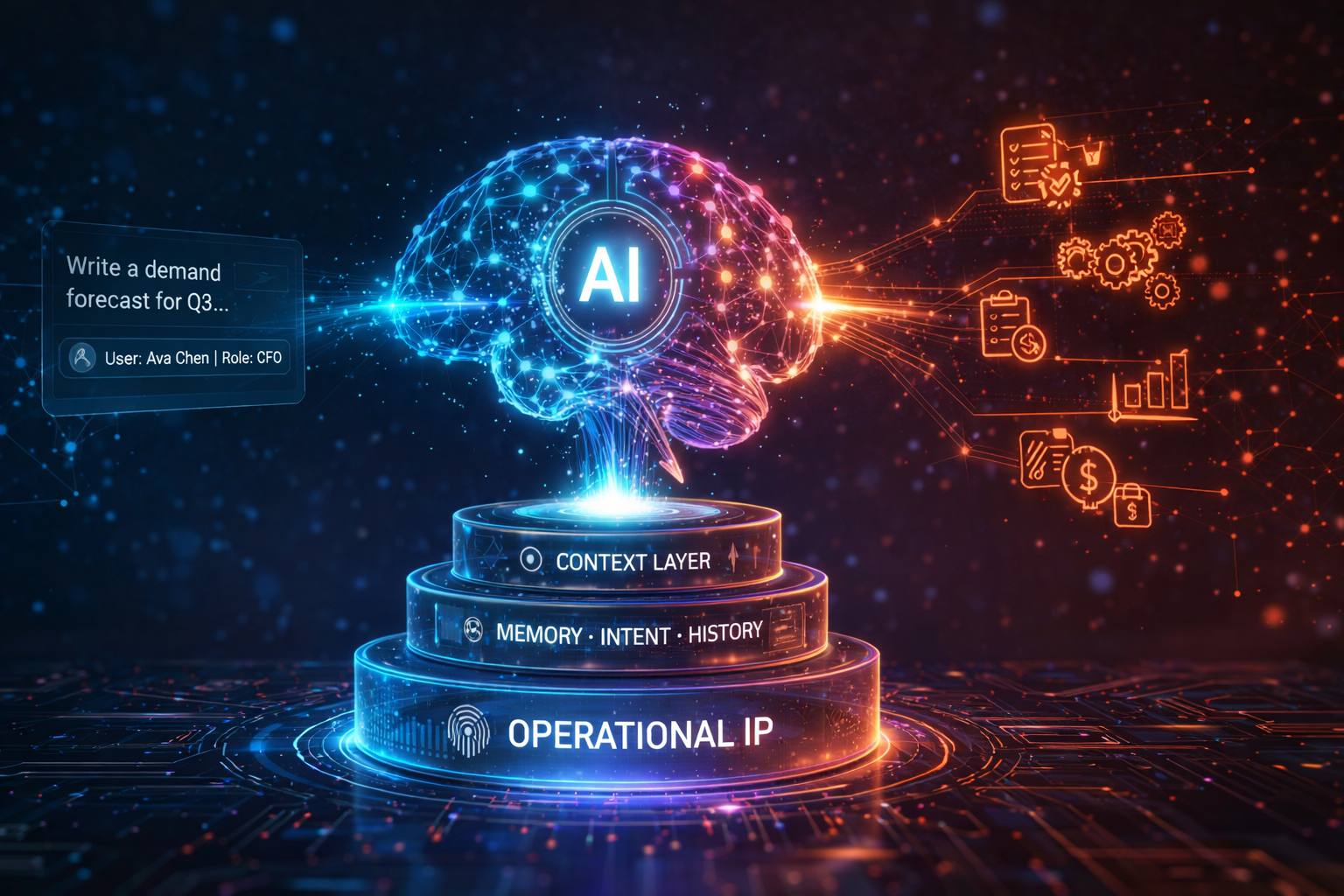
What you're really building is institutional knowledge
When someone writes a skill that encodes how your organization runs a product spec process, they aren't just creating a prompt. They're capturing how your company thinks about product decisions. The criteria that matter. The questions that get asked. The tradeoffs that are acceptable.
When that context is structured well enough for an agent to traverse it, something shifts. Institutional knowledge stops being tacit. It becomes executable.
A new PM can run the same spec process that your best PM runs. Not because they memorized a wiki page, but because the process is encoded in a context structure that an agent can follow. The thinking is preserved. The standards are embedded. The output is consistent.
That's not a configuration file. That's intellectual property.
"When someone leaves, they historically take all of the context with them. Structured, shareable context changes that equation entirely."
Every organization has dealt with this. A key person leaves and the team spends months reconstructing how things were done. The decisions, the reasoning, the process. It all lived in someone's head. Structured context doesn't fully solve that, but it changes the equation significantly. The knowledge stays. The agent can still traverse it. The new person gets the benefit of the thinking that came before them.
You can't kitchen-sink this
The instinct is to put everything into one big context document. Dump every process, every standard, every decision into a single file and let the AI sort it out.
That doesn't work.
Large, undifferentiated context files degrade performance. The agent can't distinguish what matters right now from what's background noise. Everything gets weighted the same. The output gets generic. The whole point of context—that it makes AI tools behave like someone who understands your organization—gets lost.
What's emerging instead looks a lot more like digital asset management. Context documents need metadata. They need taxonomy. They need loading rules that determine what gets surfaced and when.
Think about how a DAM system works. You don't dump every brand asset into one folder. You tag it. You categorize it. You define who needs it, when it gets served, and in what format. The same discipline applies to context.
A product spec skill doesn't need your engineering architecture decisions loaded alongside it. A code review context doesn't need your go-to-market strategy. The right context at the right time is what makes agents useful. Everything all at once makes them average.
This is a data governance problem
If this is starting to sound familiar, it should. What we're describing is data governance applied to a new kind of organizational asset.
Context documents encode how your organization makes decisions, runs processes, and evaluates work. They determine what agents do on behalf of your people. That makes them subject to the same questions any governed data asset faces: Who owns it? Who can change it? How do you know it's current? How do you prevent drift?
The organizations getting ahead of this are thinking about context in layers, defined by time horizon and authority.
Long-term context is organizational. Mission, values, strategic direction, brand voice, compliance requirements. This is largely immutable. It comes from leadership and flows down. It changes slowly, maybe annually. Every skill and agent in the organization should be able to access it, but it rarely needs to be front-loaded.
Medium-term context is team-level. How the product team runs specs. How engineering handles architecture reviews. How design does critique. These are the processes and frameworks that define how work gets done within a function. They evolve quarter to quarter. They're owned by team leads and practitioners.
Immediate context is project-level. The current sprint. The specific feature. The customer problem being solved right now. This changes constantly. It's the most volatile and the most relevant to any given task.
Each layer has different ownership, different update cadence, and different rules about who can change it. Long-term context is curated by leadership and broadly shared. Medium-term context is maintained by teams and shared within functions. Immediate context is managed by individuals and project teams.
That's not bureaucracy. That's governance. And if you don't apply it intentionally, you'll end up with the same problem organizations faced with data a decade ago. Critical assets scattered everywhere, no ownership, no versioning, and no way to trust that what you're working with is accurate.
The tools are already in place
This isn't a future-state problem that requires new infrastructure. The tools exist today.
Claude Cowork is a practical place to start. Skills, structured collections of context with metadata and loading rules, are exactly this pattern in action. A product management skill can encode your spec process, your review criteria, your templates. An engineering skill can encode your architecture standards and code review practices. These aren't theoretical. Teams are building them now.
Git gives you the sharing and versioning layer. Context documents live in a repository. They get reviewed. They get versioned. Changes are tracked. When someone improves a process, the improvement is visible and shareable. When something breaks, you can see what changed.
The discipline that matters is hygiene. Review your context documents regularly. Are they still accurate? Are they being used? Are they loading at the right time? Context that's out of date is worse than no context at all, because the agent will follow it confidently in the wrong direction.
None of this requires a platform initiative or a new tool purchase. It requires intentionality about something that's already happening organically.
This is an organizational decision, not a technical one
The reason this matters at the leadership level is that context governance is an organizational decision, not a technical one. It determines:
- Whether AI tools work consistently across teams or only for power users
- Whether institutional knowledge is retained when people leave
- Whether new hires get the benefit of how the organization actually works, not just what's in the onboarding doc
- Whether your investment in AI tools compounds over time or resets with every project
Teams that treat context as personal configuration will keep getting personal results. Some people will be great at it. Most won't. The organization won't learn from itself.
Teams that treat context as shared infrastructure will build something that gets better every time someone improves a process, captures a decision, or refines a workflow. The value compounds. The knowledge stays. The agents get more useful, not because the models improved, but because the organization got more intentional about what it feeds them.
"The teams that win at AI adoption won't be the ones with the best models. They'll be the ones that treated context as shared infrastructure instead of personal configuration."
The window is now
Most organizations haven't named this problem yet. Context is accumulating informally. People are building skills and writing process docs and creating templates without anyone coordinating the effort. That's fine for now. Early experimentation should be messy.
But at some point, and for many teams that point is approaching, someone needs to ask: what's our context governance strategy? Who owns it? Who reviews it? How do we share it? How do we keep it current? How do we make sure it reflects how we actually work, not how we worked six months ago?
The organizations that answer those questions early will have a meaningful advantage. Not because they adopted AI faster, but because they built the knowledge layer that makes AI adoption compound.
If your team is starting to accumulate context and you're wondering how to turn that into something structured and sustainable, that's a conversation worth having.